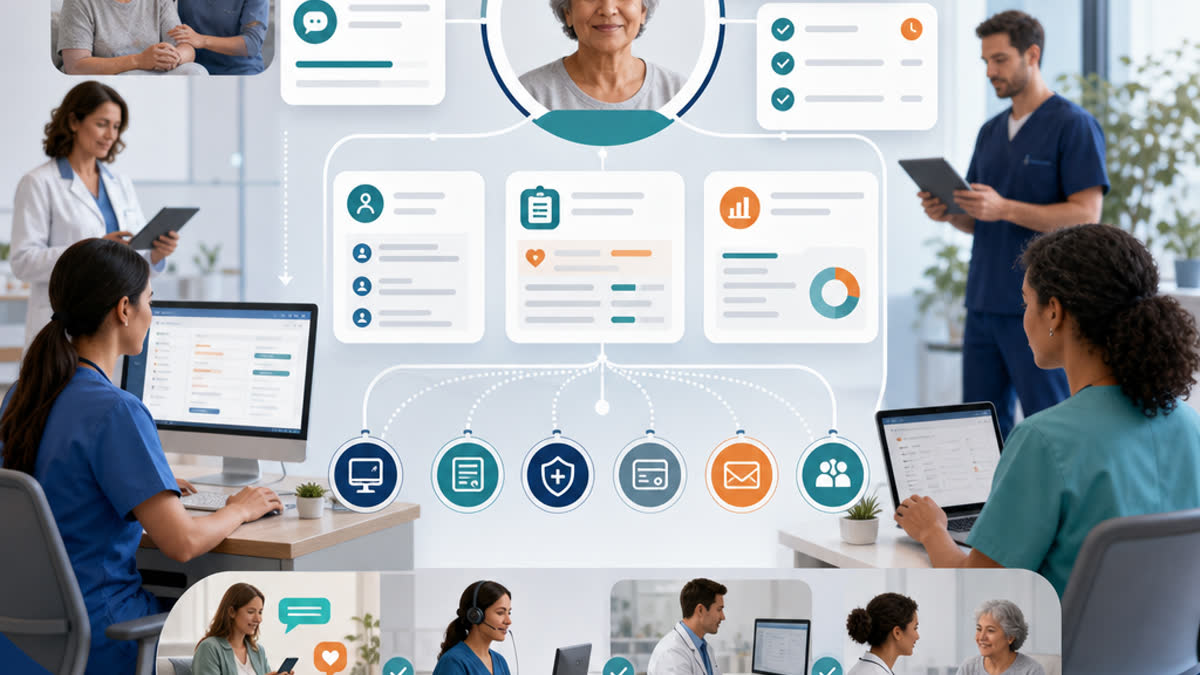
FairPath now starts where the practice starts: with the patient.
Remote care programs still matter. RPM, RTM, CCM, APCM, and related programs create real operational work: outreach, reminders, documentation, staff queues, billing visibility, and follow-up across systems that rarely talk to each other cleanly.
Practices also need those same workflows before, during, and outside formal program enrollment.
A patient may need education before RPM makes sense. A staff member may need to follow up after a missed visit. A care team may need reminders, documentation, or administrative routing before a patient qualifies for a billable care-management program. An operations leader may need one shared workspace for patient work that starts before reimbursement rules enter the conversation.
FairPath now supports patients who are not enrolled in RPM, RTM, CCM, APCM, or another remote care program.
Start with the patient. Let the program come later, if it fits.
Practices Need Patient Workflows Before Program Enrollment
Care-management platforms often organize the world around programs. A patient is in RPM, CCM, APCM, or another workflow, and the software starts there.
Patient relationships start earlier.
Patients may need reminders, check-ins, document requests, care-gap follow-up, medication questions routed to the right person, or education about a future service. That work still needs ownership, visibility, and follow-through.
In many practices, pre-program work lands in spreadsheets, inboxes, sticky notes, disconnected portals, or someone's memory. The result is familiar: scattered information, unclear ownership, missed handoffs, and no clean view of what happened.
FairPath gives practices one operational hub for that work.
Patient Outreach From One Operational Hub
FairPath now supports general patient outreach workflows outside formal program enrollment.
Use it for reminders, education, follow-up, staff queues, patient engagement, and administrative coordination. The goal is a shared operating layer for the work, not a promise that every interaction is billable.
For an independent practice, MSO, or care-management team, patient outreach is rarely one clean event. A patient may need multiple touches across multiple people:
- a reminder before an appointment;
- a follow-up after a missed call;
- education before deciding whether a care program makes sense;
- routing to a staff member for documentation or billing follow-up;
- a later transition into RPM, RTM, CCM, APCM, or another program.
FairPath keeps that work visible and organized.
AI Automation Beyond Remote Care
AI is most useful in a practice when it removes repetitive administrative work and keeps staff focused on the next right action.
FairPath's expanded non-program patient support brings AI-assisted workflows to outreach, reminders, routing, administrative follow-up, documentation support, and task coordination.
Staff stay in control. AI helps organize the repetitive work that slows them down.
A practical automation layer helps answer questions like:
- Who needs follow-up today?
- Which patients need education before a program conversation?
- Which outreach tasks are still open?
- Which documentation or billing handoff needs attention?
- Which patients may later belong in a formal care-management workflow?
That is where AI becomes operationally useful: the team gets a clearer work queue, faster routing, and better follow-through.
A Central Layer Across Disconnected Systems
Practices already have systems: EMR, billing tools, communication channels, documentation workflows, remote care vendors, patient lists, reporting processes, and staff routines.
FairPath sits between those systems as an operational layer. It helps teams coordinate patient outreach, automation, documentation, billing visibility, communication, and care-management handoffs without forcing every workflow to begin inside a remote care program.
For operations leaders, this is the important shift. FairPath has expanded from remote care program operations into a broader patient outreach, AI automation, and central workflow hub for the practice.
That gives teams more flexibility. A patient can begin as a general outreach patient. Later, if the clinical and operational situation fits, the patient can move into RPM, RTM, CCM, APCM, or another program. If no program applies, the practice still has a clean outreach and follow-up workflow.
Remote Care Still Matters When It Fits
RPM, RTM, CCM, APCM, and related programs remain important when they fit the patient, documentation, clinical model, and payer rules. FairPath continues to support those workflows.
The expansion changes the starting point.
Many practices need to build a relationship, complete outreach, organize information, or coordinate staff work before a formal program makes sense. FairPath now supports that earlier stage too.
What This Means for Practices
For independent practices, MSOs, care-management teams, and operations leaders, FairPath now has a broader role.
Use FairPath when a patient is in a remote care program. Use it when a patient is outside remote care enrollment. Use it when the team needs outreach, automation, reminders, follow-up, documentation support, billing visibility, or a shared workspace across disconnected systems.
The benefit is operational clarity.
Staff can see what needs to happen. Managers can see where work is stuck. Patients receive better follow-up. The practice keeps the path open for a formal care-management program later without forcing every patient into that structure on day one.
The Bottom Line
FairPath now supports the relationship before the program.
Some patients belong in RPM, RTM, CCM, APCM, or another remote care program. Others need outreach, education, follow-up, documentation, or coordination outside program enrollment.
FairPath supports both.
That flexibility makes FairPath a patient outreach, AI automation, and workflow hub for modern practices that need to coordinate real work across fragmented systems.
Start with the patient. Let the program come later, if it fits.